Bush Food, Bright Futures: Inside the Power of My Dilly Bag
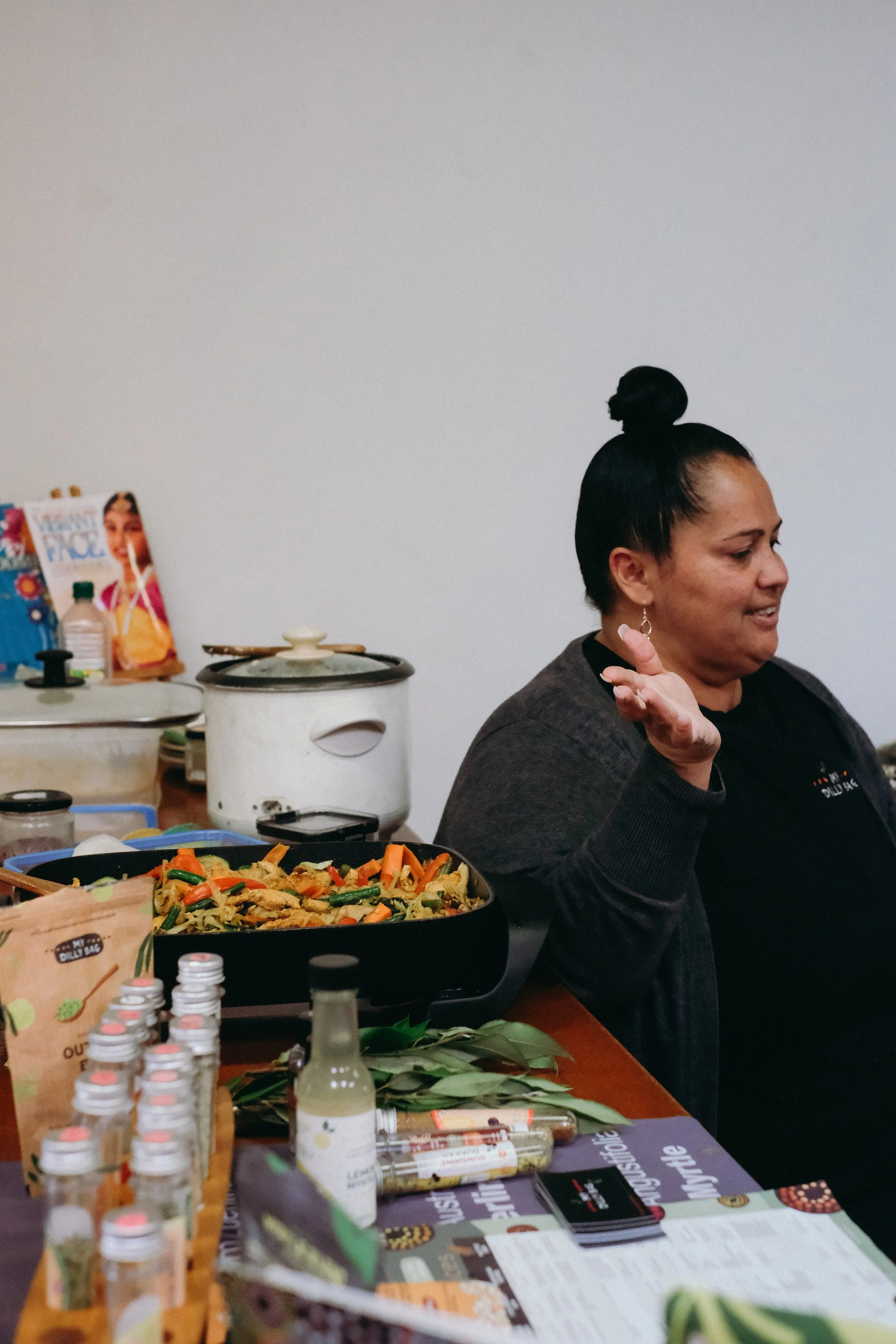
Two of our key mentors for the Indigenous Women Food and Fibre Entrepreneurs were Aunty Dale Chapman and Ashleigh Hunter, from My Dilly Bag. For more than 25 years, this Aboriginal owned bush food enterprise has been steadily championing a deeper understanding of Australian native botanicals, guided by founder and owner Aunty Dale.
WORDS & IMAGES BY ALICE ARMITAGE
At the heart of Australia’s growing interest in native ingredients sits My Dilly Bag, a business built on patience, education and cultural care. It moves through community markets, school classrooms, corporate training rooms and the kitchens where people try native ingredients for the first time. For more than twenty five years, this Aboriginal owned bush food enterprise has been steadily championing a deeper understanding of Australian native botanicals, guided by founder and owner Aunty Dale Chapman. Long before native ingredients began appearing on fashionable menus, My Dilly Bag was threading together culture, nutrition, education and connection.
Australia’s growing interest in native botanicals has reached the tipping point where finger lime pearls glitter atop cocktails and wattleseed appears in boutique breads. But long before these ingredients started to find their way into the mainstream, My Dilly Bag was being built on generations of knowledge. Here, native food isn’t a trend, it’s rooted in culture, community, nutrition and the memory of Country.
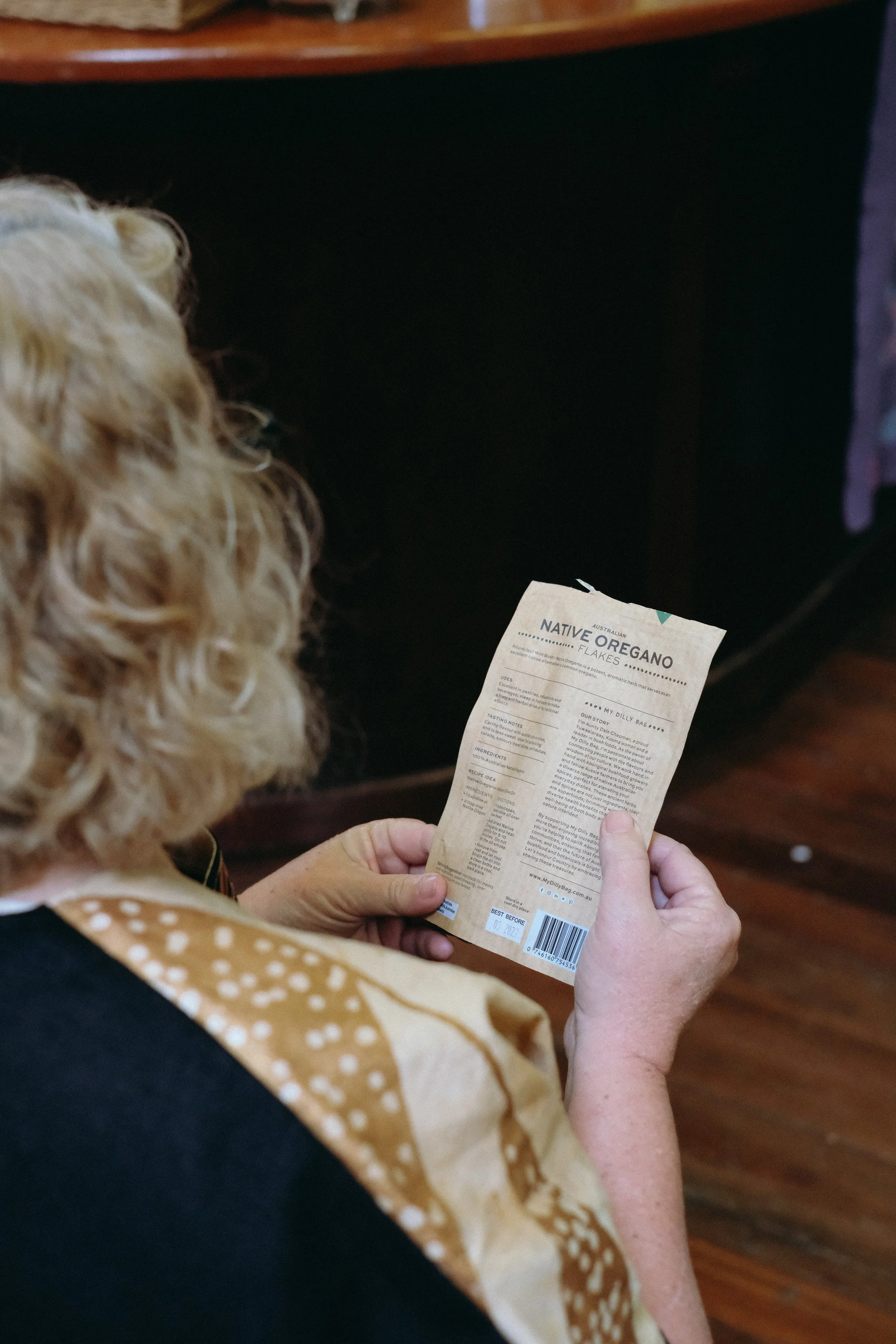
For Ash – a team member who joined the business after a long career working in kitchens – this work has opened a window into a part of culture she had not grown up speaking fluently. While her upbringing included dance, family protocols and community values, native ingredients were not always present in daily meals. Through her work at My Dilly Bag, she now sees how food carries stories, how it can nourish both body and identity, and how teaching her own children to recognise these flavours can help ensure the knowledge endures. Her daughter now works alongside her in the business, a small but meaningful thread stitched across generations.
Beyond the walls of the Sunshine Coast storefront, the team delivers workshops in schools, cultural awareness sessions for corporate groups, online training modules, market appearances and cooking demonstrations. The scope is broad, but the purpose remains steady. For many participants, these sessions serve as an introduction to native foods. At the shop counter, tasting sheets are offered, jars are opened, and visitors are encouraged to smell and sample unfamiliar flavours.
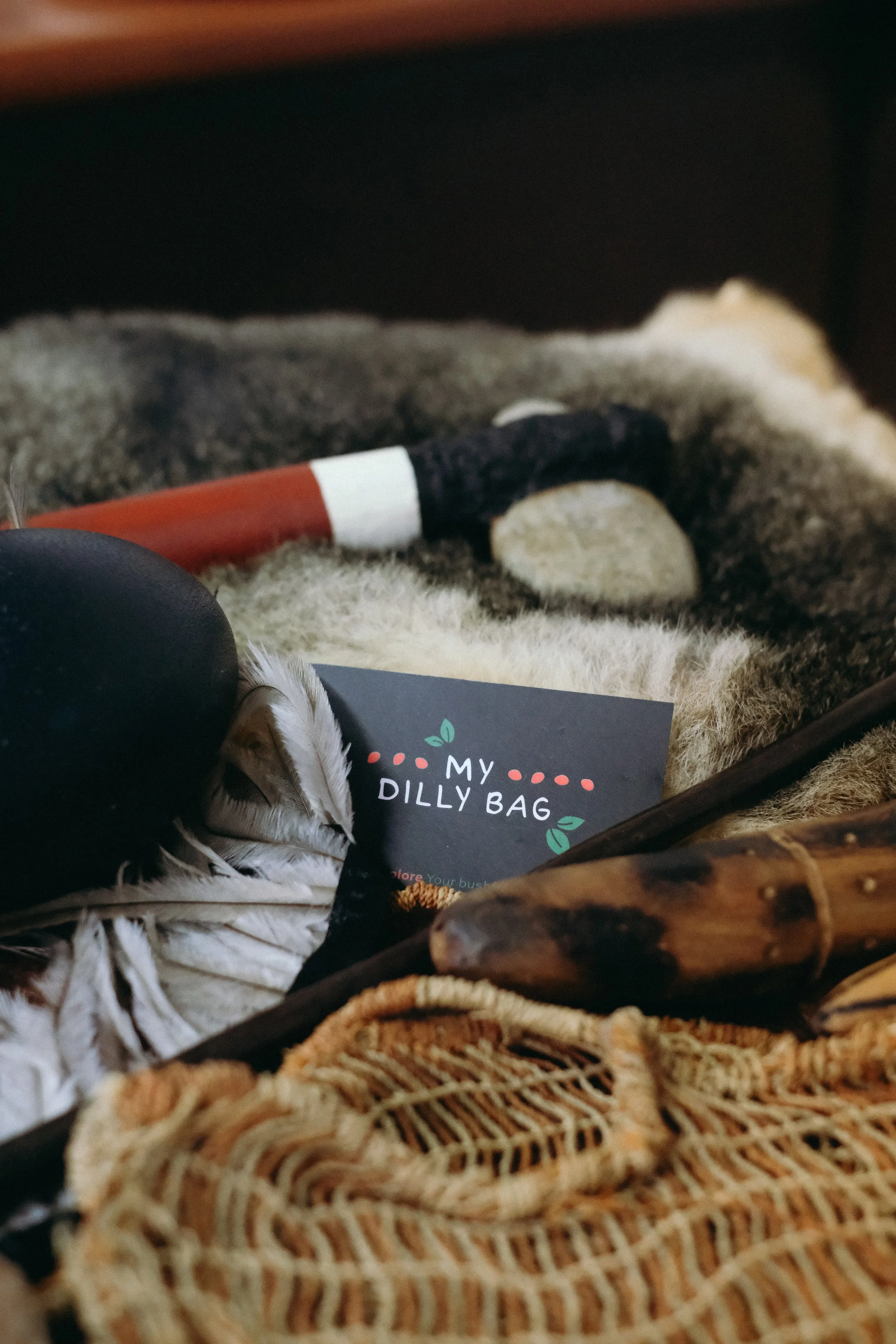
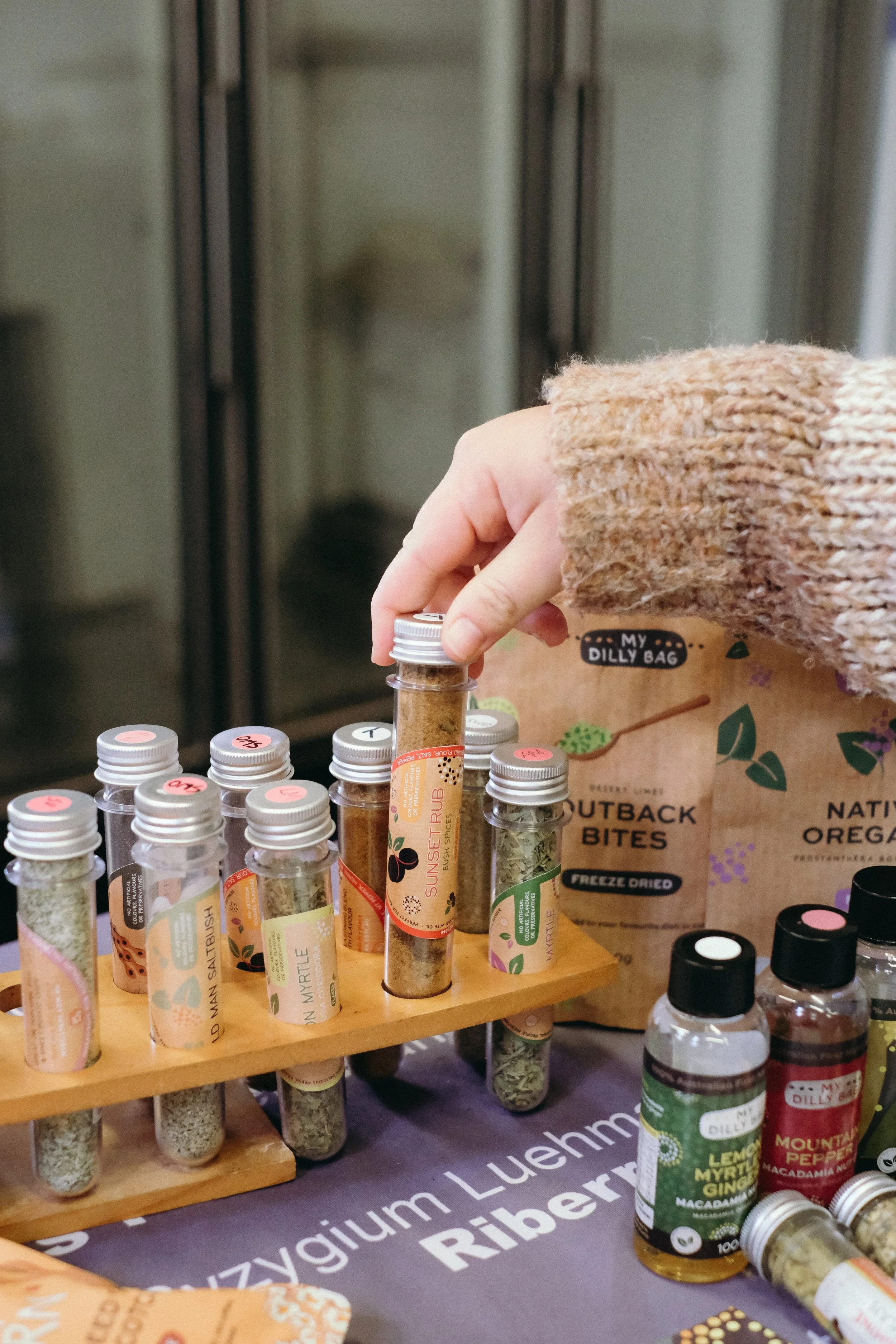
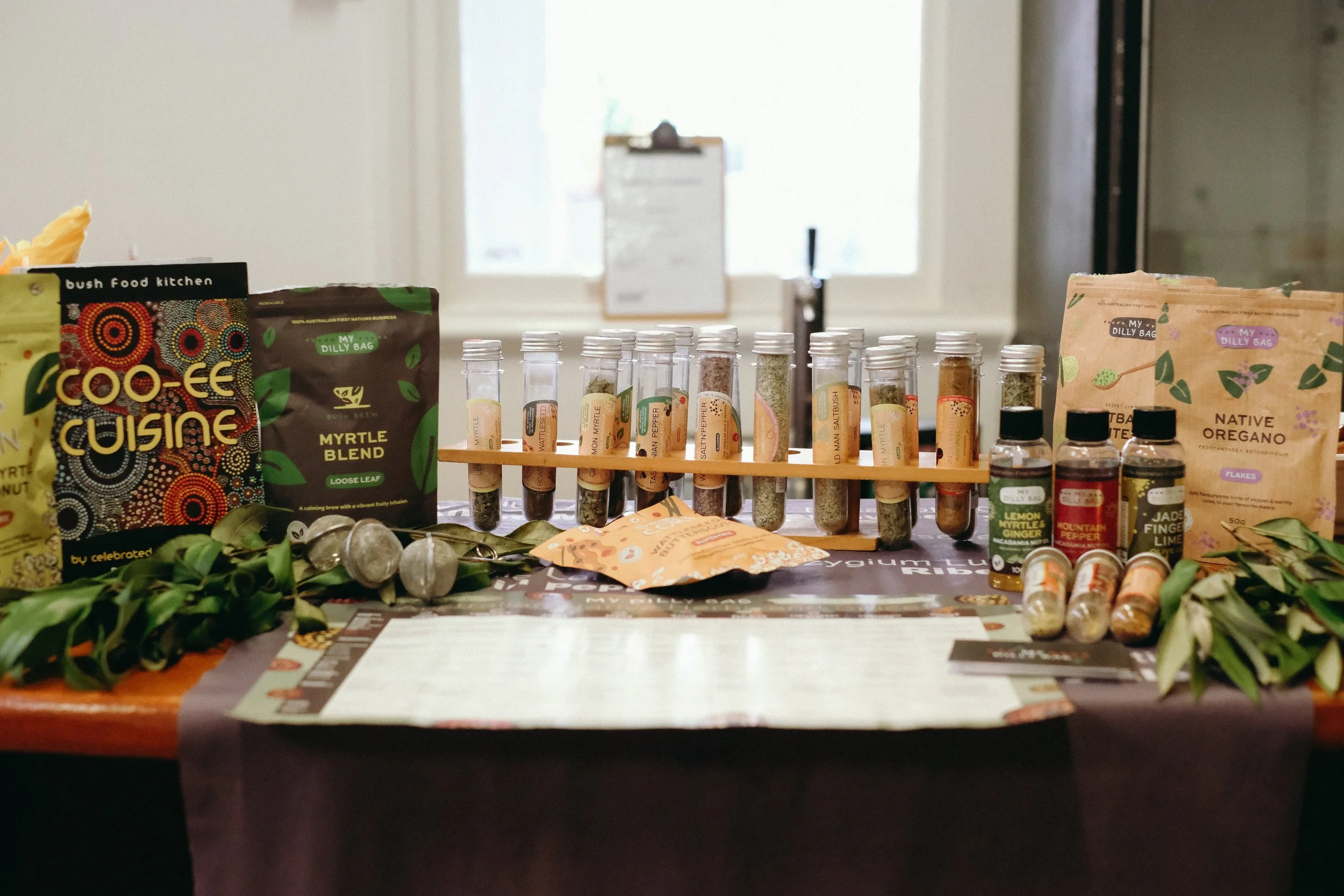
Saltbush often becomes the first point of contact. It is a humble plant, naturally lower in sodium than conventional salt, with a bright mineral warmth. Once tasted, it becomes easy to imagine it sprinkled over roasted vegetables, stirred through rice or folded into popcorn. Other blends bring native thyme, bush pepper and spice mixes into everyday meals. Before long, cooking is no longer a departure from habit but a subtle shift of hand.
Six women currently hold the day to day operations. Together they pack, grind, label and ship. They answer questions from customers who want to know how to begin. They facilitate professional development sessions for teachers and provide demonstrations for NAIDOC events. They travel into communities and workplaces across Queensland and beyond. Each interaction is another moment of knowledge being handed on with care.
The word sustainability means many things in contemporary language, but here it is measured in generational time. In children still recognising lemon myrtle on their tongues in fifty years. In how they know how native thyme smells when bruised. In how they understand that nutrition and culture were never separate concepts.
Inside the shop, the mood is warm and unhurried. Ash describes the ease of seeing a familiar face, even in a new town, and feeling less alone. It is a reminder that cultural businesses often provide more than goods and services. They create place, they create belonging.
Aboriginal and Torres Strait Islander people have cooked with these foods for tens of thousands of years. They are not emergent. They are enduring. Through enterprises like My Dilly Bag, native ingredients are finding their way back into home kitchens, school classrooms and community gardens.
You can find more information about My Dilly Bag here.